
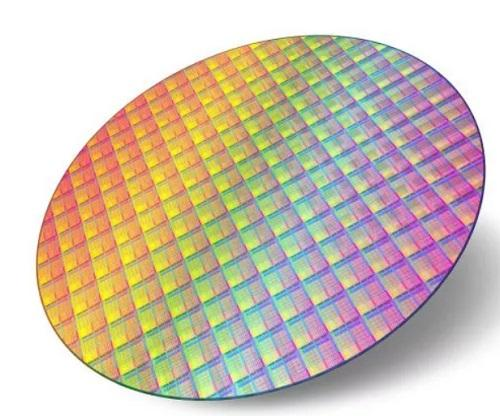
On the lithography floor, a 1°C drift in the soft bake or hard bake isn’t a “small error.” It’s a yield hit, plain and simple. You watch wafers leave the track with edge bead, linewidth spread, or solvent that never fully cleared—residue that shows up later as a defect. What you need is a heat source that treats the whole wafer as one thermal body, not a patchwork of hot and cold spots.
Infrared Precision: Sub-millimeter uniformity, repeatable
The DNS screen wafer dryer lamp is built around controlled near-infrared (NIR) heating, tuned to deliver a sub-millimeter uniform thermal field across the wafer plane. In practice, that translates to consistent photoresist temperature from center to edge, so the soft bake strips solvents evenly and the hard bake locks the resist profile—without reflow or scumming. The system holds repeatability lot-to-lot and shift-to-shift, so your critical dimension (CD) performance doesn’t wander when ambient conditions shift. The lamp output stays stable over long runs, and the design keeps particle generation near zero—exactly what you need when you’re running in Class 1–100 cleanrooms.
Why it fits wafer drying and baking in semiconductor
This lamp is aimed at the moments where thermal control decides whether the process holds together: post-clean drying that prevents watermarks, post-spin solvent removal, and the bake steps that set resist behavior before exposure. You get tighter control over thermal budget, fewer reworks, and more predictable defect performance. The payoff is higher first-pass yield and less scatter between tracks, tools, and operators. And because NIR heats the wafer directly, you’re not wasting energy heating the chamber with convection.
Installation note: match the profile to the process
To get the full benefit, the lamp has to be integrated with proper optical alignment and closed-loop temperature sensing. It’s compatible with standard DNS screen dryer platforms, but the recipe—setpoint, ramp rate, and dwell time—has to be tuned to your resist stack and substrate. Expect a short commissioning run to map emissivity and thermal response for your specific film stack. Once profiled, the system runs with minimal tweaking—but that initial setup isn’t optional.