

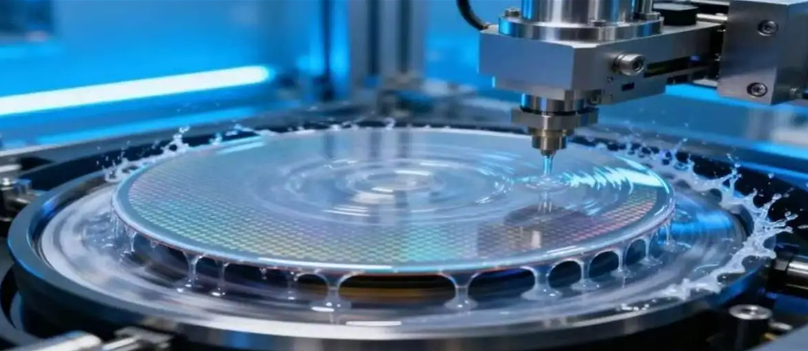
Back on the line, a wet MEMS wafer comes out of cleaning and sits waiting. The next stop—photoresist coat, soft bake, and a clean dry—has zero tolerance for thermal drift. Hit the surface with a 1°C hot spot and linewidth control turns into a crapshoot. We built this MEMS wafer drying heater to pull that uncertainty out before it even gets into the lithography stack. What matters under the hood We set the design around ±0.1°C steady-state uniformity across the wafer plane. Photoresist is sensitive enough that any temperature gradient is a direct yield risk. The heating element uses short-wave infrared to dump energy in fast, contactless bursts, so thermal lag and cold-start swing stay low. Quartz and cleanroom-compatible materials keep particle generation near zero, which plays clean in Class 1–100 environments. Repeatability is nailed down so the same thermal budget holds, cycle after cycle—no bake-profile drift between lots. Why this lands in MEMS In MEMS, wafer drying isn’t a passive checkpoint—it sets up the whole front end: adhesion, exposure latitude, and etch selectivity. With stable, uniform heat, you cut photoresist rework, reduce scrap from bake-induced defects, and shorten changeover because you stop chasing profile tweaks. You also save energy, since the system hits setpoint fast and holds it without overshoot. Reliability is tuned for 24/7 fab cadence, so it keeps running without unplanned downtime. What you need to plan for The heater drops into standard track footprints, but alignment to the wafer path and coolant flow has to match the machine tolerances. Expect a short commissioning window to lock in airflow, exhaust, and temperature setpoints to match your exact photoresist bake curve. Once it’s calibrated, the process stays locked—no drift chasing between wafers.