

Stop Letting Your Fab Equipment Turn Into an Oven
Most standard heating elements are messy. They just throw heat in every direction, and in a cramped semiconductor tool, that’s a problem. That “waste heat” doesn’t just disappear. It soaks into the inner walls, making the chassis hot enough to burn an operator and stressing out the sensitive electronics living right next door. It’s a headache nobody needs.
Getting the heat where it actually belongs
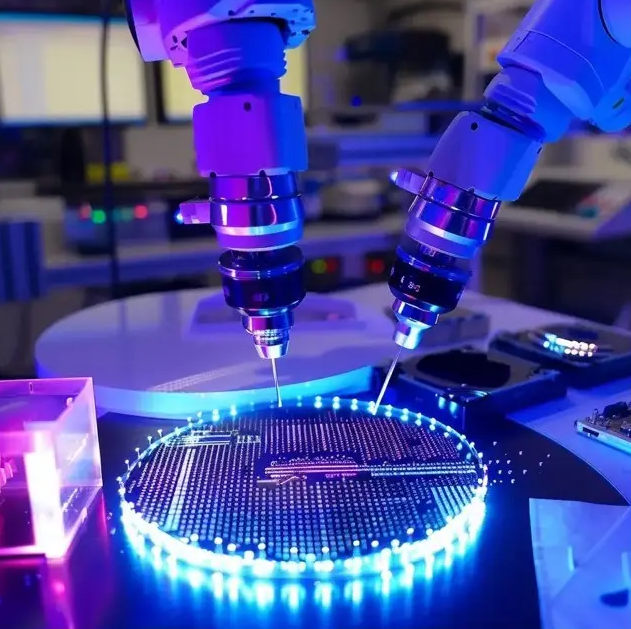
We handle this with short-wave IR lamps and some clever reflectors. Instead of letting energy bleed all over the machine frame, we squeeze it into a tight beam. We point that beam exactly where it needs to go—the wafer or substrate—and leave the rest of the equipment alone. It’s a simple shift in logic: stop heating the room and start heating the part.
Why this actually matters for your floor
When you control the angle of the heat, the inner walls stay cool. You get a concentrated hot zone right on target, but the outer shell stays safe to touch. The best part? You can ditch those bulky insulation blankets and oversized cooling fans. Fans are annoying—they vibrate and they kick up particles. Getting rid of them makes the whole environment a lot cleaner.
The catch (and how to handle it)
Now, look—directional IR isn’t magic. It’s fast and the zoning is incredibly precise, but it’s picky about alignment. If your lamp is off by just a few degrees, you’re going to miss your target and accidentally bake a hole in your chamber wall. You can’t be lazy with the install. Your mounting brackets need to be rock-solid and your calibration has to be spot-on. We’ve made these a drop-in replacement for standard heaters, so you don’t have to tear apart your entire chassis. You just get a safer tool and a cooler interior. Just do me a favor: double-check that your power supply can handle the wattage of the IR array. If you underpower it, you’re just asking for a premature burnout.