
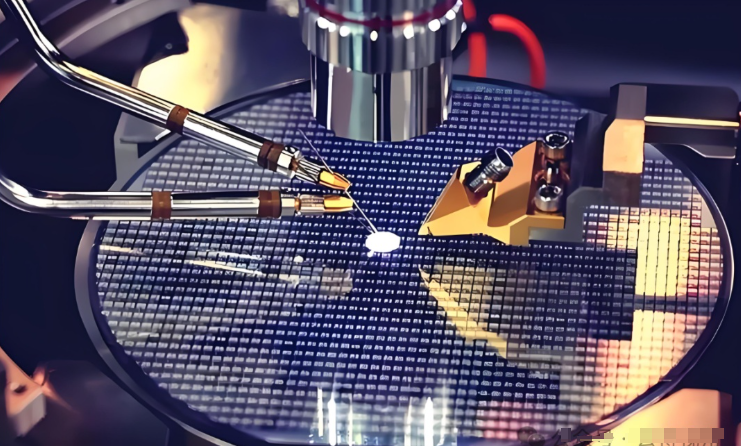
On the lithography floor, a half-degree drift in soft bake temperature will move your critical dimension by nanometers. This isn’t just heat—it’s control, pure and simple. Standard lamps can kick off ozone, and that residue changes photoresist adhesion while pushing particle counts the wrong way. We run ozone-free infrared, so the thermal budget stays where you set it, no surprises. What matters under the hood We use short-wave infrared emitters with fast response, locking in stable output within seconds. Across the bake zone, wafer-level uniformity holds at ±0.1°C, and run-to-run repeatability stays consistent. The quartz envelope and cleanroom-compatible materials are built for Class 1–100 environments. You get no outgassing and zero particle events while the lamps are on. Power density is tuned to photoresist profiles, and the spectral output is matched to the absorption curve of common resist stacks—less thermal lag, fewer edge effects. Why this plays in photoresist processing Soft bake is about pulling solvent and setting film stress. Hard bake is what stabilizes the image before etch. With ozone-free infrared, you keep line-width control tight, cut scum defects, and lower rework. The system runs 24/7 with stable output, and you use less energy than convection because the heat goes straight into the film, not the chamber. Throughput climbs without sacrificing yield, and lamp life supports long campaigns with predictable maintenance windows. The practical bits Lamp output is line-of-sight, so the integration geometry has to keep the beam aligned with the wafer path. Use reflective fixtures to keep stray heat off adjacent optics. After the tool sits idle, there’s a short warm-up to reach thermal equilibrium—plan your bake profiles around that settling time. Compatibility with existing tracks is straightforward, but confirm mechanical clearances and power connections with your equipment team.