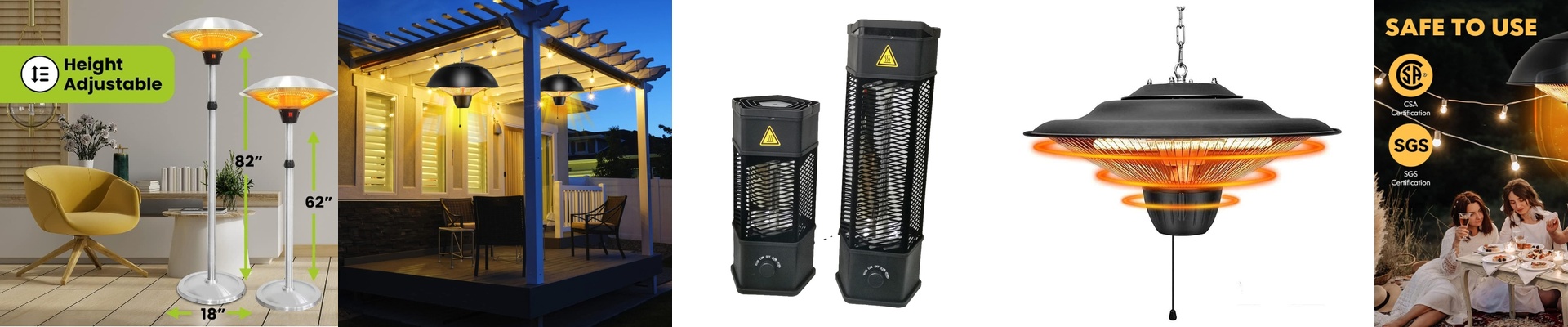
Why Your Outdoor Heaters Keep Dying (And How We Fixed It)
Let’s be honest: outdoor bars and patios are absolute torture for heating elements. If you’ve ever had a heater quit on you mid-season, it’s usually for the same reason. Moisture gets inside the housing, causes a short, or just eats away at the filaments until they snap. It’s frustrating, expensive, and a total pain to deal with.
The “Fog” Problem
Most people think rain is the only enemy. It isn’t. The real killer is the temperature swing. When the air shifts, you get condensation—that annoying fog—trapped inside the lamp housing. Now, imagine a tiny drop of cold water landing on a red-hot quartz tube.**Crack.**Just like that, your heater is toast. To stop this, we added a special anti-fogging seal and a chassis that actually breathes. It lets the moist air out but keeps the rain out. By keeping the inside dry, those filaments actually last.
Dealing with the Splashes
If you’re running a patio, things get messy. Drinks spill, cleaners get sprayed, and the weather does its thing. Without the right gaskets and sealed connections, water hits the electrical terminals. That leads to arcing—which is basically a tiny, destructive lightning bolt inside your socket. It ruins the lamp and the housing in one go. We focused on keeping the wiring bone-dry. We want the electricity going exactly where it belongs: into the heating element, not leaking into the frame.
The Catch
Here’s the thing: you can’t just wrap the whole thing in plastic. If you make a heater 100% airtight, the heat builds up inside and melts the wiring. It’s a balancing act. We had to find the sweet spot between a tight seal and enough airflow to keep things cool. Because of this, you’ve got to make sure you leave enough room around the unit when you mount it. If the vents are blocked, the moist air has nowhere to go, and you’re back to square one. We built these to take a beating from the elements. That way, you can actually enjoy your patio instead of spending every spring replacing lamps.